Shoulder Surgery in Edinburgh

I provide specialist assessment and treatment for the full range of shoulder problems. From persistent pain and sporting injuries to arthritis, instability and fractures, I offer clear advice and tailored treatment plans. Shoulder surgery in Edinburgh is considered only when it is likely to offer meaningful benefit for your symptoms and function.
Book your Consultation


Specialist shoulder care,
from diagnosis to recovery

Shoulder pain can affect sleep, work, exercise and everyday activities such as dressing or reaching overhead. At Fife Shoulder Surgery, I assess the cause of your symptoms carefully before recommending treatment. Many shoulder conditions improve without an operation, through physiotherapy, medication, injections or activity modification. When these options have not helped, Shoulder surgery in Edinburgh may be appropriate.

As a dedicated shoulder specialist, I aim to make the process as straightforward as possible, explaining your diagnosis, treatment options, expected recovery and any potential risks.


Shoulder Surgery Procedures I Offer

I provide a comprehensive range of arthroscopic, reconstructive, fracture and replacement procedures. The most appropriate shoulder operation will depend on your diagnosis, symptoms, activity level, general health and treatment goals.


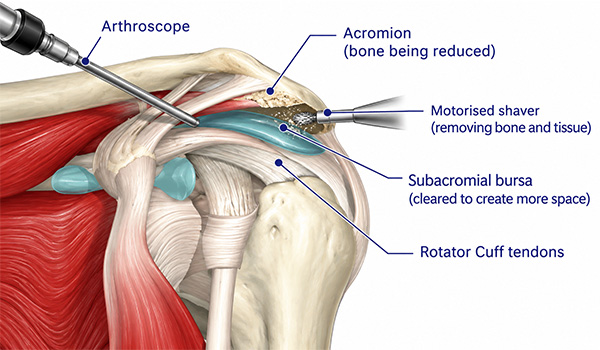
Arthroscopic Subacromial Decompression

This keyhole procedure may be considered for selected patients with persistent subacromial shoulder pain that has not improved with appropriate non-operative treatment.

  • May help address irritation around the rotator cuff
    tendons and bursa
  • Can be considered where reaching, lifting or lying on the affected shoulder is painful
  • Performed through small incisions using an arthroscopic camera
    and specialist instruments
  • Rehabilitation helps restore comfortable movement,
    strength and function


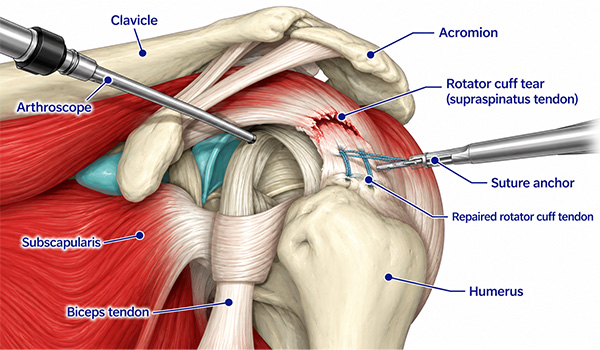
Arthroscopic Rotator Cuff Repair

The rotator cuff is a group of tendons that controls shoulder movement and strength. A tear can cause pain, weakness, night discomfort and difficulty lifting the arm.

  • Used to repair damaged rotator cuff tendons where appropriate
  • Usually performed arthroscopically through small incisions
  • May be recommended following an injury or for
    persistent symptomatic tears
  • Requires a period of protection in a sling followed
    by structured rehabilitation


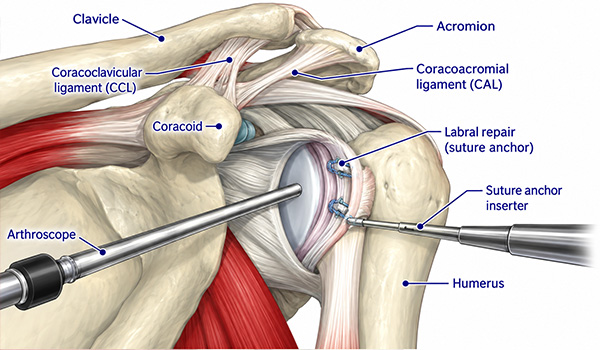
Arthroscopic Stabilisation

Shoulder instability can occur after a dislocation or repeated episodes where the shoulder feels as though it slips, pops or moves out of place.

  • Repairs or tightens supporting tissues around the shoulder joint
  • May be suitable for recurrent dislocations, instability
    or ongoing apprehension
  • Particularly relevant for active people and those involved
    in contact or overhead sports
  • Aims to improve shoulder stability, confidence and
    control during movement

​


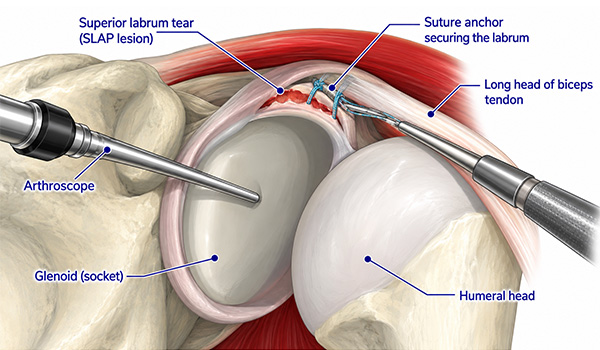
Arthroscopic SLAP Repair

A SLAP tear affects the cartilage rim around the shoulder socket and may be associated with throwing, overhead activity or a traction injury.

  • Symptoms can include deep shoulder pain, clicking, catching, popping and weakness
  • Assessment includes your history, examination findings and appropriate imaging
  • Surgery may be considered where rehabilitation and activity modification have not resolved symptoms
  • Treatment is tailored carefully, as not every SLAP tear requires surgical repair


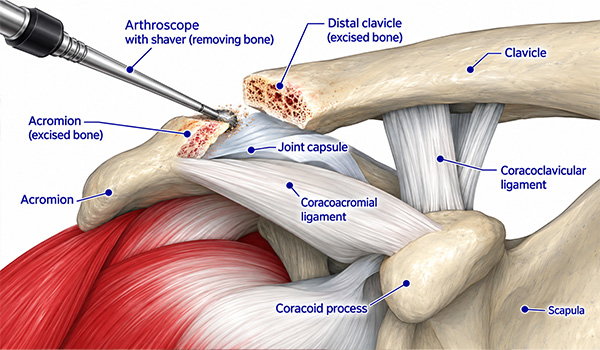
Arthroscopic AC Joint Excision

The acromioclavicular (AC) joint is located at the top of the shoulder. Arthritis or previous injury can cause pain when lifting, pressing or moving the arm across the body.

  • Removes a small amount of bone from the painful AC joint
  • May reduce painful contact within the joint
  • Often considered after physiotherapy, medication or injections have not provided sufficient relief
  • Usually performed as a keyhole procedure


​


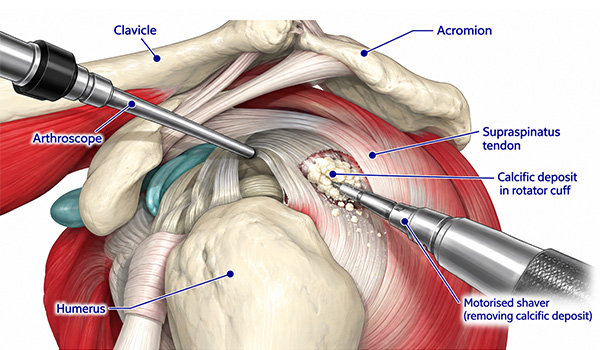
Arthroscopic Excision of Calcific Deposits

Calcific tendonitis occurs when calcium deposits develop within a shoulder tendon. It can cause sudden, severe pain or persistent restriction of movement.

  • Many cases improve without an operation
  • Arthroscopic removal may be considered for severe,
    prolonged or recurrent symptoms
  • Can be combined with treatment for associated tendon or subacromial problems where needed
  • Rehabilitation is important to restore movement and
    strength after surgery


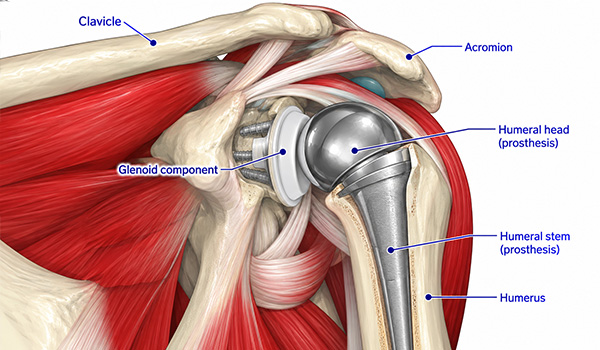
Shoulder Replacement Surgery

Shoulder replacement may be an option for severe arthritis, substantial joint damage or persistent pain that has not responded to suitable non-surgical care.

  • Damaged joint surfaces are replaced with artificial components
  • The aim is to reduce pain and improve useful shoulder movement
  • Different replacement designs may be considered according to joint damage, bone quality and rotator cuff function
  • Recovery involves rehabilitation, gradual strengthening and realistic discussion of expected outcomes


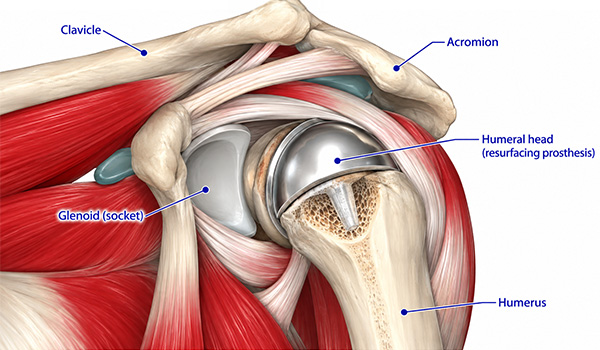
Resurfacing Shoulder Replacement

Resurfacing shoulder replacement can be a bone-preserving option for suitable patients, particularly where the upper arm bone is in good condition.

  • Covers the damaged surface of the upper arm bone with a metal cap
  • May preserve more bone than a conventional stemmed shoulder replacement
  • Suitability depends on the degree of arthritis, bone quality and rotator cuff tendon function
  • Not every patient will be suitable for this type of replacement


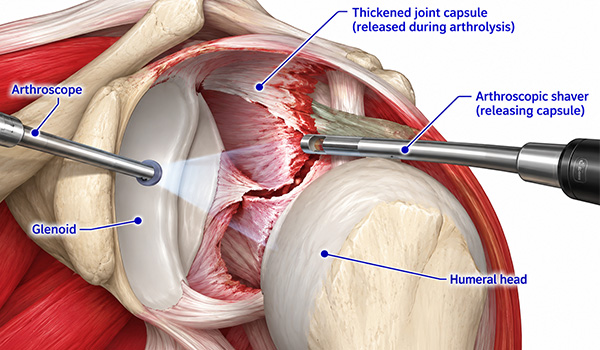
Manipulation and Arthroscopic Arthrolysis
for Frozen Shoulder

Frozen shoulder can cause severe pain followed by marked stiffness and loss of movement. Most people improve with time, pain relief, injections and physiotherapy, but surgery may occasionally be considered.

  • Manipulation under anaesthetic may help improve movement in selected cases
  • Arthroscopic arthrolysis uses keyhole surgery to release the tight shoulder capsule
  • Usually considered where significant stiffness persists despite appropriate non-operative treatment
  • Early rehabilitation is particularly important following treatment to maintain movement gained


AC Joint Reconstruction using
Nottingham Surgilig

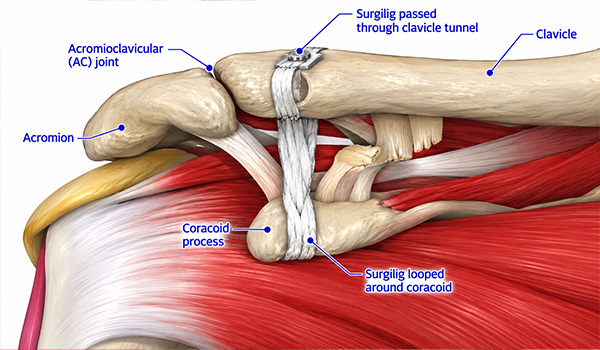
AC joint injuries can occur after a fall, direct blow or sporting injury. While many can be treated without surgery, reconstruction may be considered for selected high-grade injuries or persistent symptoms.

  • Aims to restore the position and stability of the AC joint
  • May be discussed following a significant separation of the collarbone from the shoulder
  • The Nottingham Surgilig system may be used where clinically appropriate
  • Rehabilitation is required to protect the reconstruction while healing takes place


Proximal Humeral Fracture Fixation

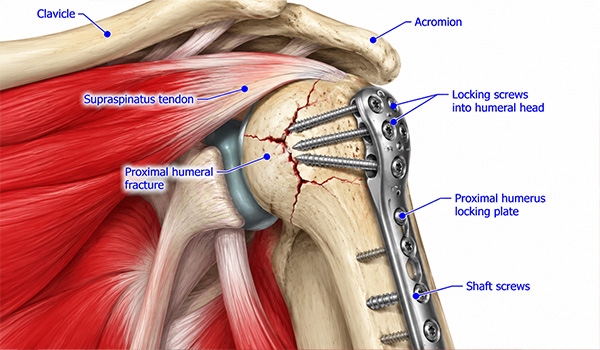
A proximal humeral fracture affects the upper part of the arm bone near the shoulder joint. Some fractures can be managed without surgery, while others require fixation.

  • Surgery may be considered for displaced, unstable or complex fractures
  • Fixation may involve plates, screws or other implants
  • The treatment plan depends on fracture pattern, bone quality, age and functional needs
  • Rehabilitation is planned carefully to support healing and restore shoulder movement


Clavicular Fracture Fixation

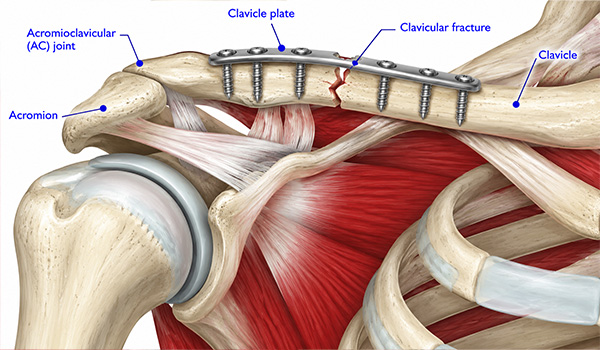
A clavicle, or collarbone, fracture may occur following a fall, sporting injury or direct impact to the shoulder.

  • Many clavicle fractures heal without an operation
  • Fixation may be recommended for significantly displaced, shortened or unstable fractures
  • Surgery commonly involves stabilising the bone with a plate and screws
  • Follow-up and rehabilitation help monitor healing and restore shoulder function


Humeral Shaft Fracture Fixation

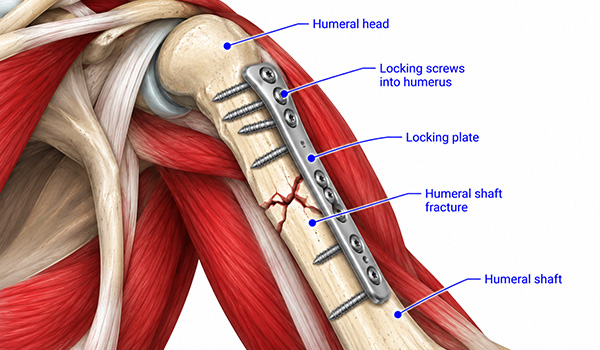
A humeral shaft fracture involves the middle section of the upper arm bone. Treatment depends on the fracture pattern, alignment and any associated injuries.

Some fractures can be treated using a brace and close follow-up
Surgery may be considered where the fracture is unstable, significantly displaced or unlikely to heal satisfactorily without fixation
Fixation can involve plates, screws or other suitable implants
Recovery includes monitoring bone healing and gradually restoring arm and shoulder movement


Diagnose your shoulder problem

A careful shoulder examination is essential to identify the likely source of pain, stiffness, weakness or instability. During your consultation, I will discuss your symptoms and medical history, assess shoulder and neck movement, and examine strength, stability and tenderness. Where appropriate, radiographs and shoulder ultrasound may be performed to help clarify the diagnosis and guide treatment.


Urgent referral

Some symptoms require urgent medical assessment. Please seek prompt advice if you notice a swelling or lump that is increasing in size, as this may need investigation to exclude a tumour. Fever with a swollen, hot or painful joint requires urgent assessment to exclude infection. A marked loss of shoulder movement following an injury should be assessed to exclude a rotator cuff tear. Sudden severe shoulder pain may occur with calcific tendonitis, but other acute causes should also be considered.

Neck pathology

In people aged approximately 25 to 70, shoulder symptoms may sometimes originate from the neck rather than the shoulder joint itself. Symptoms can include neck pain and stiffness, pain at the base of the neck or around the shoulder blade, and pain radiating down the arm. Tingling or numbness in the arm, forearm, hand or fingers may also be present. On examination, the neck may be stiff, neck movements may reproduce the symptoms, and there may be neurological signs affecting the arm.

Impingement syndrome

Between around 35 and 75 years of age, pain in the upper arm or on the outer side of the shoulder, near the acromion, may indicate subacromial shoulder pain or impingement syndrome. Typical symptoms include night pain, difficulty using the arm above shoulder height and a painful arc of movement. Assessment will help establish whether symptoms are due to tendon irritation, bursitis or another shoulder condition.

Rotator cuff tear

A rotator cuff tear may cause upper-arm or outer-shoulder pain, night pain and difficulty lifting the arm above shoulder height. It is particularly important to assess symptoms that begin after a fall or other injury. A painful arc and weakness when lifting the arm out to the side, known as abduction, can be signs of a rotator cuff tear. Imaging may be required to assess the tendons and determine the most appropriate treatment.

AC joint pathology

AC joint problems are commonly seen in people aged approximately 30 to 50 and can cause pain at the front or top of the shoulder. You may find it difficult to sleep on the affected side or use the arm above shoulder height. There may be local tenderness or a noticeable bump over the AC joint, and pain is often reproduced when the arm is moved across the body. These symptoms may be caused by AC joint arthritis, inflammation or a previous injury.

Frozen shoulder

Frozen shoulder most often affects people aged around 40 to 60. It can cause severe pain, usually followed by increasing stiffness and marked restriction of movement. Pain may be felt at the front of the shoulder, and people with diabetes or thyroid conditions are at increased risk. On examination, both active movement and passive movement are reduced, particularly external rotation. Most cases improve over time, although treatment may be needed to manage pain and restore movement.

Glenohumeral arthritis

From the age of around 60 onwards, severe pain at the front of the shoulder, stiffness and difficulty with everyday movement may be signs of glenohumeral arthritis. Some people notice grating, clicking or creaking from the joint. Examination may show reduced shoulder movement, including passive external rotation, and crepitus may be felt or heard as the joint moves. X-rays can help assess the degree of arthritis and support treatment planning.

Shoulder instability

Shoulder instability is more common in younger people, often between 10 and 35 years of age, particularly after a previous dislocation. Symptoms may include a feeling that the shoulder is loose, slipping, popping or coming out of joint. Some people experience apprehension or fear that the shoulder will dislocate when the arm is moved out to the side and rotated externally. A specialist examination can assess the direction and severity of instability and whether rehabilitation or stabilisation surgery may be appropriate.

SLAP tear

A SLAP tear, meaning a Superior Labral Anterior and Posterior tear, can occur in people aged around 20 to 40 following a traction injury, repetitive throwing, or other overhead movements. Symptoms may include popping, snapping or catching within the shoulder, often with deep or front-of-shoulder pain. During examination, resistance applied to the forearm while the arm is held at shoulder height may reproduce anterior shoulder pain. Imaging and clinical assessment help determine whether the labrum is involved and whether treatment is needed.

Winging of the scapula

Scapular winging can occur at any age and describes abnormal prominence of the shoulder blade. It may follow surgery or injury around the posterior triangle of the neck, occur in swimmers, or be associated with conditions such as facioscapulohumeral muscular dystrophy. When pushing against a wall with an outstretched hand, the inner border of the shoulder blade may become prominent. Assessment may include examination of shoulder blade movement, muscle strength and nerve function.


Why choose Mr Sunil Sharma?

Dedicated Shoulder and Elbow Expertise

I focus specifically on shoulder and elbow conditions, providing diagnosis, treatment and surgical care for the full patient journey.
 

Experienced
Consultant Care

I have been a Consultant Orthopaedic Surgeon since 2007 and have undertaken specialist fellowship training at the internationally recognised Reading Shoulder Unit.

One-Stop Assessment Approach

At Fife Shoulder Surgery, I may perform examination, radiographs and ultrasound during your initial consultation where appropriate, helping to reduce delays.

Evidence-Based Treatment

As a shoulder surgeon in Edinburgh, I use internationally validated outcome measures and discuss both surgical and non-surgical options honestly and clearly.


Where I Serve

NHS Consultations

Queen Margaret Hospital
Whitefield Road,
Dunfermline,
KY12 0SU

Victoria Hospital
Hayfield Road,
Kirkcaldy,
KY2 5AH

Private Consultations

Spire Shawfair Park Hospital
10 Easter Shawfair,
Edinburgh,
EH22 1FE

Spire Murrayfield Hospital
122 Corstorphine Road, Edinburgh,
EH12 6UD 


Questions about shoulder surgery in Edinburgh​

When is shoulder surgery recommended for persistent shoulder pain?

Shoulder surgery may be recommended when pain, weakness, stiffness or instability continues despite suitable non-surgical treatment, such as physiotherapy, medication, injections or activity modification. A shoulder specialist will assess your diagnosis, imaging, function, general health and treatment goals before advising whether surgery is likely to help.

What types of shoulder problems can be treated with surgery?

Shoulder surgery can treat selected rotator cuff tears, recurrent dislocations and instability, SLAP tears, AC joint arthritis or injury, calcific tendonitis, frozen shoulder, fractures and severe shoulder arthritis. Not every condition requires an operation, and treatment is tailored to the individual.

What shoulder surgery is available for a torn rotator cuff?

Arthroscopic rotator cuff repair may be suitable for a symptomatic rotator cuff tear causing pain, weakness, night pain or difficulty lifting the arm. The procedure uses small incisions to repair the damaged tendon. Suitability depends on the tear pattern and size, tendon quality, symptoms and shoulder function.

Can shoulder surgery treat a recurring shoulder dislocation?

Yes. Arthroscopic shoulder stabilisation can repair or tighten the supporting tissues around the shoulder joint for suitable patients with recurrent dislocations, slipping or apprehension. It is often considered after repeated instability episodes, particularly for active people and those involved in overhead or contact sports.

When is shoulder replacement surgery recommended?

Shoulder replacement surgery may be considered for severe arthritis, major joint damage, some complex fractures or arthritis associated with an irreparable rotator cuff tear. Options can include conventional, resurfacing or reverse shoulder replacement. The best option depends on bone quality, tendon function, symptoms and expected activity needs.

What is involved in keyhole arthroscopic shoulder surgery?

Arthroscopic shoulder surgery is performed through small incisions using a camera and specialised instruments. It may be used for rotator cuff repair, shoulder stabilisation, SLAP repair, AC joint excision, subacromial procedures or removal of calcific deposits. Most patients require a period of rehabilitation afterwards.

How long does it take to recover from shoulder surgery?

Recovery varies considerably by procedure and individual. Minor arthroscopic procedures may allow earlier movement, while rotator cuff repair, stabilisation and shoulder replacement require more prolonged protection, physiotherapy and gradual strengthening. Your surgeon and physiotherapist will provide a recovery plan based on your operation and progress.

How successful is shoulder surgery for reducing pain and improving movement?

Many patients experience meaningful pain relief and improved shoulder function when surgery is appropriately matched to the diagnosis. Results depend on the condition being treated, the severity of damage, tissue quality, rehabilitation, general health and adherence to post-operative advice. Expected benefits, limitations and risks should be discussed before surgery.

How long will I need to take off work after shoulder surgery?

Time away from work depends on the operation and your role. Desk-based work may be possible sooner than manual, lifting, overhead or physically demanding work. Following rotator cuff repair, stabilisation or shoulder replacement, return to heavier duties can take several months. Individual advice will be provided during your consultation.

What should I expect before, during and after shoulder surgery?

Before surgery, you will have a consultation, examination and appropriate imaging, with discussion of alternatives, benefits and risks. On the day, the procedure may be performed under general anaesthetic, often with additional regional pain relief. Afterwards, you may need a sling, pain management, wound care and structured physiotherapy to restore movement and strength.


Arrange a shoulder surgery consultation

If shoulder pain, weakness, stiffness or instability is affecting your life, contact Fife Shoulder Surgery to arrange an assessment. I will listen to your concerns, examine your shoulder and explain the available options. For Shoulder surgery in Edinburgh, call 01313 162530 or email sunil.sharma2@nhs.scot to discuss an appointment.

The opinions expressed on this page are those of Mr Sunil Sharma and are intended as a simple aid to help patients understand shoulder conditions and treatments. They do not replace an individual medical assessment. Please consult a qualified doctor regarding diagnosis and treatment of medical conditions.

Book a Consultation