What Is Ulnar Nerve Decompression?
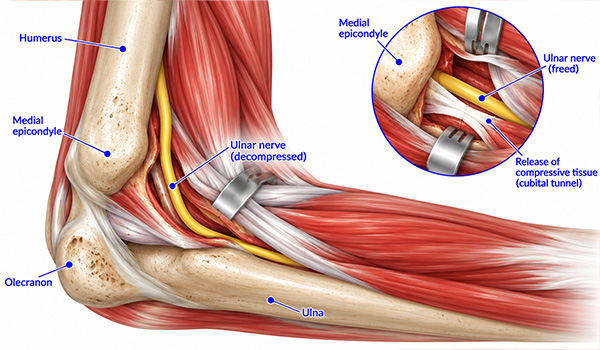
The ulnar nerve is one of the main nerves supplying the arm and hand. It travels around the inside of the elbow, behind the bony prominence called the medial epicondyle. As it lies close to the skin here, it can become irritated or compressed.
This is known as cubital tunnel syndrome. It may cause pain on the inner side of the elbow, tingling or numbness in the little finger and ring finger, and weakness or clumsiness in the hand. Ulnar nerve decompression in Edinburgh is an operation designed to release pressure on the nerve and help prevent further deterioration.
I will assess your symptoms, examine your elbow and hand, and discuss whether treatment such as activity modification, splinting, exercises or surgery is appropriate. I provide specialist elbow surgery in Edinburgh for a wide range of elbow conditions.
What Does a Ulnar Nerve Decompression Surgery Involve?
Ulnar nerve surgery is usually carried out under a general anaesthetic, sometimes with a nerve block to provide additional pain relief after the procedure.
During ulnar nerve decompression in Edinburgh, I make an incision on the inside of the elbow and carefully identify the ulnar nerve. The tight tissues around the nerve are released to create more space and allow it to move more freely through the cubital tunnel.
In some circumstances, the nerve may need to be moved from behind the bony prominence to a position at the front of the elbow. This is called an ulnar nerve transposition. Whether this is required depends on the position, stability and condition of the nerve.
Once the nerve has been adequately released, the wound is closed and covered with a dressing. Your arm may be placed in a sling for comfort.
General Advice Following Surgery
Sling and Movement
You may be given a sling after your operation. This is usually for support and comfort rather than immobilisation. I will advise you on when and how to use it. You will normally be encouraged to move your fingers, wrist and elbow in a controlled way to reduce stiffness.
Pain and Swelling
Some pain, bruising and swelling are expected after elbow nerve surgery. Take pain relief as prescribed or advised. Keeping the arm elevated where possible and using ice as directed may help reduce swelling and discomfort.
Wound Care
Keep your dressing clean and dry in line with the instructions provided when you leave hospital. You will be advised about wound review and when stitches, if present, should be removed.
Everyday Activities
Avoid heavy lifting, forceful pushing or pulling, and prolonged pressure on the inner side of the elbow during early recovery. If repetitive bending of the elbow contributed to your symptoms, you may need to modify these activities initially.
Work and Driving
Return to work depends on your role. Desk-based work may be possible sooner than physically demanding work. You should not drive until you can safely control the vehicle and perform an emergency manoeuvre comfortably.
Risks and Possible Complications
All operations carry some risk. Complications following ulnar nerve decompression in Edinburgh are uncommon, but it is important that you understand the possible risks before deciding whether to proceed. I will discuss these with you in relation to your individual circumstances.
Anaesthetic-related problems
There are general risks associated with anaesthesia, which will be discussed by your anaesthetist before surgery.
Infection or bleeding
Infection, bleeding, bruising or wound swelling can occur following surgery, although these are usually treatable.
Nerve symptoms
There may be ongoing numbness, tingling or weakness in the hand after surgery. Nerve recovery can be slow, particularly if compression has been present for a long time. In some cases, established nerve damage may not fully recover.
Nerve irritation
or injury
The ulnar nerve can be irritated during recovery, and there is a small risk of nerve injury during surgery. If a transposition is performed, the nerve may occasionally remain sensitive or unstable.
Elbow Surgery Serving Edinburgh and Fife
NHS Consultations
Queen Margaret Hospital
Whitefield Road,
Dunfermline,
KY12 0SU
Victoria Hospital
Hayfield Road,
Kirkcaldy,
KY2 5AH
Private Consultations
Spire Shawfair Park Hospital
10 Easter Shawfair,
Edinburgh,
EH22 1FE
Spire Murrayfield Hospital
122 Corstorphine Road, Edinburgh,
EH12 6UD
Questions about ulnar nerve decompression
When is surgery recommended for a compressed ulnar nerve?
Ulnar nerve decompression surgery may be recommended when symptoms persist despite activity changes, splinting or exercises, or when there is progressive numbness, hand weakness, muscle wasting or concern about worsening nerve function. Your surgeon will assess your symptoms, examination findings and any nerve tests before advising on treatment.
Can a trapped ulnar nerve heal without surgery?
Milder cases of cubital tunnel syndrome can improve without surgery. Avoiding prolonged elbow bending or pressure on the inner elbow, using a night splint, adapting activities and undertaking advised exercises may reduce irritation. Surgery may be considered if symptoms are severe, persistent or associated with weakness.
What are the symptoms of ulnar nerve compression at the elbow?
Common symptoms include tingling or numbness in the little finger and ring finger, pain or sensitivity on the inner side of the elbow, reduced grip strength, hand clumsiness and weakness in the small hand muscles. Symptoms may be worse when the elbow is bent, including at night.
What happens during ulnar nerve decompression surgery?
During ulnar nerve decompression in Edinburgh, an incision is made on the inside of the elbow. Tight tissue around the ulnar nerve is released to create more space and reduce pressure. In some cases, the nerve is moved to the front of the elbow; this is called ulnar nerve transposition.
How is a trapped ulnar nerve diagnosed before surgery?
Diagnosis usually involves discussing your symptoms and medical history, followed by examination of the elbow, hand strength and sensation. Nerve conduction studies or electromyography may be arranged to assess nerve function and help confirm the degree and location of compression.
What are the alternatives to ulnar nerve decompression surgery?
Non-surgical treatment may include avoiding pressure on the elbow, reducing repetitive bending, using elbow padding or a night splint, adapting work or sport activities, pain relief and guided exercises. These measures are often suitable for early or mild cubital tunnel syndrome.
How long does it take to recover from ulnar nerve decompression?
Early wound healing commonly takes around two weeks, while comfort and elbow movement improve over the following weeks. Nerve recovery can take several months and may be slower where compression has been present for a long time. Recovery varies according to the severity of nerve irritation and the procedure performed.
When can I return to work, driving and exercise after ulnar nerve decompression?
Desk-based work may be possible relatively soon, while heavy manual work may require a longer period of recovery. You should not drive until you can safely control the vehicle and perform an emergency manoeuvre comfortably. Your return to exercise and lifting should be gradual and guided by your surgeon’s advice.
Will ulnar nerve decompression improve numbness and tingling in the hand?
Surgery aims to relieve pressure on the nerve and prevent further deterioration. Tingling and numbness may improve, but nerve recovery is gradual and may be incomplete if significant nerve damage was present before surgery. Earlier assessment is particularly important if weakness or muscle wasting is developing.
What are the risks and potential complications of ulnar nerve decompression surgery?
Possible complications include infection, bleeding, bruising, wound swelling, scar sensitivity, stiffness and persistent symptoms. There is also a small risk of nerve irritation or injury, recurrent compression or ongoing numbness and weakness. Anaesthetic risks will be discussed separately, and individual risks are reviewed before surgery.
Arrange an Elbow Consultation
If you have persistent tingling in your fingers, hand weakness, inner elbow pain or symptoms of cubital tunnel syndrome, I can assess whether these may be caused by ulnar nerve compression. Early assessment can be important where weakness or progressive numbness is developing.
To discuss ulnar nerve decompression in Edinburgh or other options for elbow surgery in Edinburgh, please contact Fife Shoulder Surgery on 01313 162530 or email sunil.sharma2@nhs.scot.