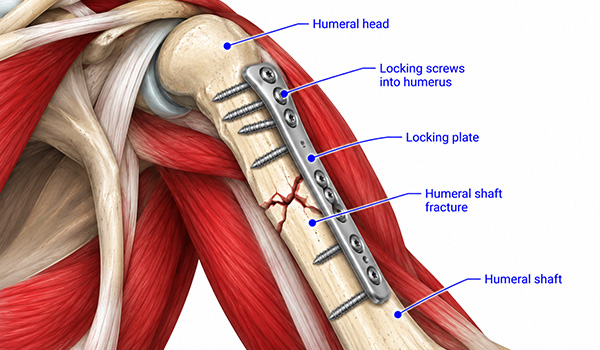
What is Proximal Humeral Fracture Fixation?
The proximal humerus is the upper part of the arm bone, forming the ball of the shoulder joint. A proximal humerus fracture may cause significant pain, bruising, swelling and difficulty moving the arm.
Many fractures can heal without an operation. However, Proximal humerus fracture surgery in Edinburgh may be recommended where the bone fragments are displaced, the fracture is unstable or the joint surface is involved. Fracture fixation aims to restore the bone's position as accurately as possible, providing stability while healing takes place and helping to preserve shoulder movement and function.
As part of my shoulder surgery in Edinburgh practice, I assess the fracture pattern, your general health, activity levels and individual aims before advising on treatment.
What Does the Proximal Humeral Fracture Fixation Surgery Involve?
Proximal humerus fracture fixation is usually performed under a general anaesthetic, often with a nerve block to improve pain relief after surgery. During Proximal humerus fracture surgery in Edinburgh, I make an incision around the shoulder to access the broken bone.
The individual fragments are carefully brought back towards their normal position. I then stabilise the fracture using a specially designed metal plate and screws. This fracture fixation holds the bone securely while it heals.
The wound is closed and your arm is placed in a sling to protect the shoulder. The precise surgical technique depends on the severity and pattern of the humeral fracture, the quality of the bone and whether the shoulder joint surface has been affected.
General Advice Following Surgery
Recovery from Proximal humerus fracture surgery in Edinburgh takes time. My aim is to provide clear guidance and coordinate your rehabilitation so that you can progress safely.
Wearing your Sling
You will normally be given a sling to support your arm and protect the repair during the early stages of healing. I will advise you how long it should be worn and when it can be removed for exercises and washing.
Managing Pain and Swelling
It is normal to experience pain and swelling after shoulder fracture surgery. Take your medication as advised. Keeping the arm supported and using ice only as directed may help reduce discomfort.
Physiotherapy and Movement
Your physiotherapist will guide you through safe exercises. Early rehabilitation commonly focuses on gentle movement before strengthening is introduced. Attending physiotherapy and completing your exercises as advised are important parts of recovery.
Daily Activities,
Driving and Work
Avoid lifting, pushing, pulling or using the operated arm to support your body weight until advised otherwise. You should not drive until you can safely control a vehicle and perform an emergency manoeuvre. Return to work depends on your recovery and the physical demands of your role.
Risks and Possible Complications
All operations carry some risk, although complications are uncommon. Before Proximal humerus fracture surgery in Edinburgh, I will discuss the benefits, alternatives and risks relevant to your individual injury. Even with successful healing, the shoulder may not fully return to its previous strength, movement or level of function.
Infection
Infection can occur around the wound or deeper surgical site and may require antibiotics or further treatment.
Stiffness and ongoing pain
A shoulder can remain stiff or painful after a fracture, particularly where the original injury was severe
Nerve, blood vessel or implant problems
There is a small risk of injury to nearby nerves or blood vessels. Plates and screws can occasionally loosen, move or cause irritation.
Blood supply and joint changes
A serious fracture can affect the blood supply to the humeral head. This may lead to collapse of the bone, arthritis or later problems within the shoulder joint.
Shoulder Surgery Serving Edinburgh and Fife
NHS Consultations
Queen Margaret Hospital
Whitefield Road,
Dunfermline,
KY12 0SU
Victoria Hospital
Hayfield Road,
Kirkcaldy,
KY2 5AH
Private Consultations
Spire Shawfair Park Hospital
10 Easter Shawfair,
Edinburgh,
EH22 1FE
Spire Murrayfield Hospital
122 Corstorphine Road, Edinburgh,
EH12 6UD
Questions about arthroscopic subacromial decompression
When does a proximal humeral fracture require surgery?
Proximal humerus fracture surgery may be advised if the broken bone fragments are significantly displaced, the fracture is unstable, the shoulder joint surface is involved or the fracture is unlikely to heal in a good position without fixation. Your surgeon will also consider your bone quality, general health, activity level and recovery goals.
Can a proximal humerus fracture heal without surgery?
Yes. Many proximal humerus fractures heal without an operation, particularly when the bone remains well aligned and stable. Non-operative treatment may include a sling for comfort, pain relief and a structured physiotherapy programme. Follow-up assessment and imaging may be used to check that healing is progressing appropriately.
What is proximal humeral fracture fixation surgery?
Proximal humeral fracture fixation is an operation to realign and stabilise a broken upper arm bone near the shoulder. The fracture fragments are positioned as accurately as possible and held with a purpose-designed metal plate and screws while the bone heals.
How is a proximal humerus fracture diagnosed?
A proximal humerus fracture is diagnosed through a clinical assessment and imaging, usually X-rays. A CT scan may sometimes be required to define complex fracture patterns, assess joint involvement and help plan shoulder fracture surgery where needed.
What happens during surgery to fix a proximal humeral fracture?
Proximal humerus fracture fixation is usually carried out under a general anaesthetic, often with a nerve block for pain relief. An incision is made around the shoulder, the bone fragments are carefully repositioned and a plate and screws are used to secure the fracture. Your arm is then supported in a sling.
What are the alternatives to surgical fixation for a proximal humerus fracture?
The main alternative is non-operative management with a sling, medication, supervised exercises and physiotherapy. For some severe fractures, particularly where the joint surface or blood supply is badly affected, shoulder replacement surgery may occasionally be considered. The most suitable option depends on the individual fracture and patient.
How long does it take to recover from proximal humeral fracture fixation?
Recovery after proximal humerus fracture surgery varies according to the fracture severity, bone quality and your rehabilitation progress. Bone healing commonly takes several weeks, while improvement in strength and shoulder movement can continue for many months. Physiotherapy and regular follow-up are important parts of recovery.
How long will I need to wear a sling after proximal humerus fracture surgery?
A sling is normally used during the early healing period to protect the shoulder and provide support. The exact duration depends on the fracture pattern, stability of the fixation and your progress. Your surgeon and physiotherapist will advise when it is safe to remove the sling for washing and exercises.
When can I return to work, driving and exercise after proximal humerus fracture fixation?
Return to work, driving and exercise depends on your healing, shoulder control and the physical demands involved. You should not drive until you can safely control the vehicle and perform an emergency manoeuvre. Avoid lifting, pushing, pulling and weight-bearing through the arm until you have been advised it is safe.
What are the risks and potential complications of proximal humeral fracture fixation?
Potential complications include infection, stiffness, persistent pain, delayed healing or non-union, movement or irritation of plates and screws, and injury to nearby nerves or blood vessels. Severe fractures can also affect blood supply to the humeral head, leading to bone collapse or arthritis. Your individual risks will be discussed before surgery.
Arrange a shoulder consultation
If you have been diagnosed with a proximal humerus fracture, or are concerned about pain and reduced movement after a shoulder injury, I can assess your condition and discuss your options. Proximal humerus fracture surgery in Edinburgh is not necessary for every fracture, and I will recommend treatment based on your individual circumstances.
To discuss shoulder fracture fixation in Edinburgh with Fife Shoulder Surgery, please contact my team on 01313 162530 or email sunil.sharma2@nhs.scot.