Shoulder surgery recovery

Post-Operative Information

Following an operation, clear guidance can make your recovery feel more manageable. I provide practical post-operative advice to help you understand what to expect after shoulder surgery or elbow surgery, including pain relief, wound care, slings, exercises and returning to normal activities. Every procedure and patient is different, so your own instructions from me and your physiotherapist should always take priority. Good Shoulder surgery recovery depends on protecting the repair, following your rehabilitation plan and asking for advice if you are concerned.
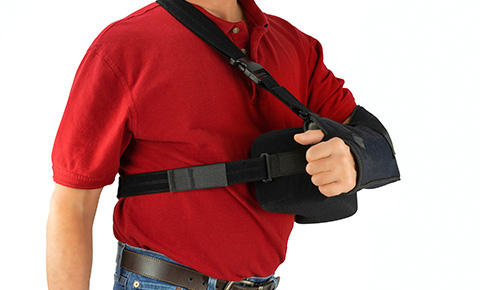


Wearing a Shoulder Sling

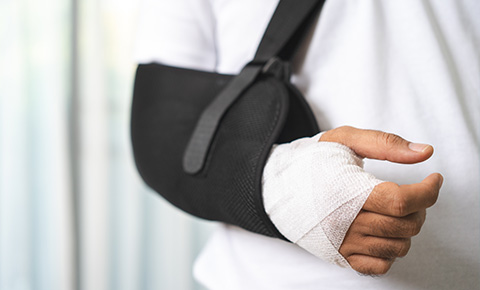
The type of sling you receive, and how long you need to wear it, depends on the operation performed. Your physiotherapist will show you how to wear and remove it safely. A sling protects the shoulder while tissues heal, but it is important to complete any exercises you have been given.

Manipulation under anaesthetic and capsular release

The sling can usually be discarded as soon as possible. You may have a nerve block after surgery, meaning the arm feels numb and does not move normally. Wear the sling until this wears off, usually within 12–24 hours. Remove the sling every hour to complete the exercises shown by your physiotherapist.

Arthroscopic subacromial decompression, AC joint excision and calcific deposit excision

The sling is for comfort only and should normally be discarded within one or two days. Take it off every hour to exercise the arm as advised. If your shoulder is painful at night, you may find it more comfortable to wear the sling for a little longer when sleeping.

Shoulder replacement

You must wear your sling for three to six weeks, depending on the type of replacement. Keep it on while sleeping. Remove it four or five times a day for the exercises prescribed by your physiotherapist, and when washing, drying and dressing.


Shoulder stabilisation, SLAP repair and Weaver-Dunn procedure

The sling must usually be worn for six weeks. Remove it to wash, dry under the arm and dress, but do not lift, twist or actively use the operated arm during these activities.


Rotator cuff repair

A sling is normally required for three to six weeks, depending on the size of the repair. Some larger repairs require an abduction sling with a wedge to hold the elbow away from your side. Do not remove the wedge to wash; wear clothing over it as advised.


Living with a Shoulder Sling

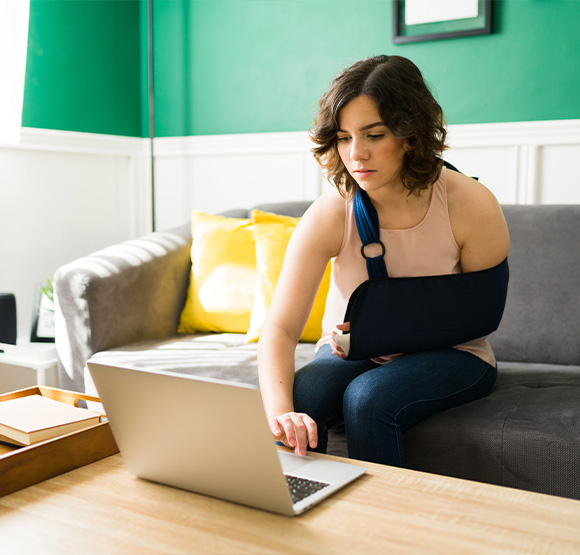
If you have had a rotator cuff repair, stabilisation procedure or shoulder replacement, you may need to wear a sling for several weeks. This is an important part of Shoulder surgery recovery, helping to protect the healing tendon, joint or repaired tissues. Plan ahead for dressing, washing, sleeping and preparing meals, as you will need to rely more on your unoperated arm.


Poly-sling

A poly-sling supports your arm close to your body. It may be removed for washing, dressing and the exercises you have been shown, provided you keep the operated arm relaxed and do not lift it independently.


Abduction sling

An abduction sling includes a wedge that keeps your arm slightly away from your body. It is commonly used after larger rotator cuff repairs. Do not remove the wedge unless I or your physiotherapist has specifically told you to do so. 


Dressing

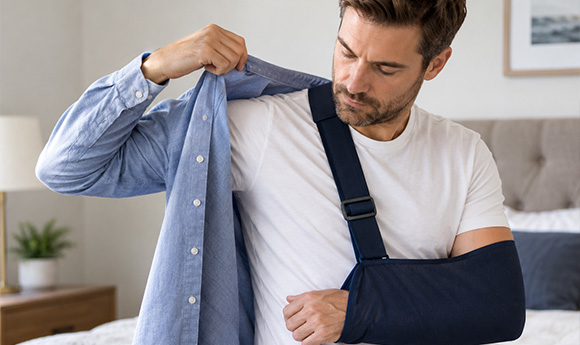
For the first three to six weeks, loose-fitting clothes that fasten at the front, or large, baggy T-shirts, are often easiest. You may initially find it more comfortable to wear clothes over your sling. As you progress, you can usually place the sling over your clothing when advised.

Helpful clothing choices include:

  • Avoid tops with small buttons, hooks or difficult zips.
  • Choose trousers or skirts with elasticated waists.
  • Consider front-fastening or strapless bras if a
    conventional bra is uncomfortable.
  • Wear slip-on or easy-fitting shoes where possible.
  • Keep frequently used clothing within easy reach.

By around six weeks, many patients can begin dressing more normally, although this varies depending on the procedure and your progress.


Dressing the Operated Arm

When you are able to dress without clothing over the sling:

  • Always dress the operated arm first.
  • Sit or lean forward and allow the arm to hang relaxed by your side.
  • Use your unoperated arm to guide the sleeve over the operated arm.
  • Do not use the operated arm to help.
  • Dress the unoperated arm next, then refit the sling


Washing

Keeping your wound clean and dry is important after shoulder surgery. Waterproof dressings may be provided, but follow the specific wound-care instructions you receive. You may need help with washing during the first few weeks, especially if you are wearing a sling. A shower cubicle, over-bath shower or washing while leaning over a sink may be easier and safer.

Washing with a poly-sling

  • Remove the sling while keeping your hand against your stomach.
  • Lean forward gently and allow the operated arm to hang loose.
  • Wash, dry and apply deodorant under the arm without actively lifting it.
  • Replace the sling before standing upright.

Washing with an abduction sling

  • Do not remove the sling or wedge.
  • Place a small towel under the arm, on top of the wedge.
  • Use a cloth to wash and rinse under the arm, then dry carefully.
  • Apply deodorant and remove the towel.


Feeding

For approximately six weeks after a major shoulder procedure, plan to feed yourself using your unoperated hand only. Prepare easy-to-open foods and drinks where possible. This temporary adjustment is a normal part of Shoulder surgery recovery and helps avoid placing strain through the operated shoulder.


Transferring

Transferring means getting in and out of bed, a chair, the bath, or on and off the toilet. During the first six weeks, push up using your unoperated arm only. Do not use the operated arm to push yourself up from a chair or bed. After six weeks, you may gradually return to using both arms as comfort and clinical advice allow.


Sleeping

Sleeping can be uncomfortable in the early stages, particularly following shoulder replacement, stabilisation or rotator cuff repair. For the first six weeks, keep your sling on in bed unless you have been given different instructions. Supporting the arm well can reduce discomfort and help you rest.

You may find one of the following positions more comfortable:

  • Sleep on your back with a pillow beneath the operated arm.
  • Sleep semi-upright, supported by several pillows.
  • Sleep on your unoperated side with the operated arm supported by pillows.
  • If using an abduction sling, a semi-sitting position is often easiest.


Kitchen Activities

For the first six weeks, use your unoperated arm for kitchen tasks, including making meals, drinks and snacks. After this, you may begin using both arms for lighter activities if advised, but avoid lifting anything heavy for three months. Fife Shoulder Surgery recommends preparing your home and meals before surgery where possible, making the early stage of Shoulder surgery recovery less demanding.

Kitchen advice:

  • Fill the kettle with a small jug and only boil the amount needed.
  • Heat small quantities of water in a microwave where suitable.
  • Prepare freezer meals before admission or buy simple meals.
  • Serve food directly from pans using a spoon rather than lifting heavy cookware.
  • Avoid placing heavy dishes in the oven if they will require two hands to remove.


Housework

You may usually begin light housework using the operated arm after around six weeks, subject to your comfort and rehabilitation guidance. More strenuous tasks, such as vacuuming, lifting shopping bags, moving furniture or heavy cleaning, should be avoided for at least three months. Protecting the shoulder during this period supports a safe Shoulder surgery recovery.


Walking and Stairs

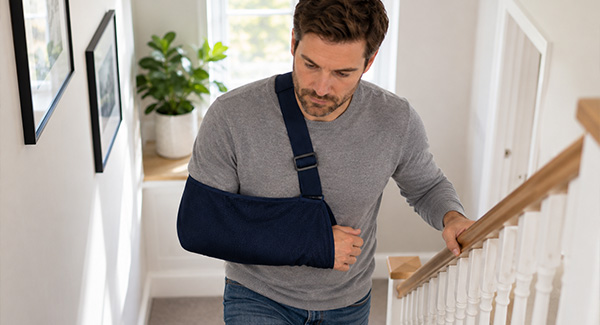
If you use a walking stick or crutch, it should be held in the unoperated hand for the first six weeks. If you rely on a frame or wheeled walker, please discuss this with me or the pre-assessment team before surgery. When using stairs, hold the bannister with your unoperated hand. You may benefit from a second bannister or assistance at home initially. 


Returning to Driving, Work and Sport After Arthroscopic Procedures

This guidance applies to arthroscopic subacromial decompression, AC joint excision, calcific deposit excision, capsular release and shoulder manipulation.

Driving

You may be able to begin driving one to three weeks after surgery, once you are comfortable, out of the sling and able to safely control the vehicle. You must be able to perform an emergency stop and should check your insurer's requirements.

Work

Sedentary work may be possible after around one week. Lighter manual work may take three to six weeks, while heavier manual work can take six to 12 weeks.

Sport

Breaststroke swimming may be possible from around four weeks, while freestyle may take six weeks.

Golf

Many patients return between six and 12 weeks.

Contact, racquet and higher-risk sports

Rugby, football, martial arts, horse riding, racquet sports and rock climbing may require six to 18 weeks, depending on strength and recovery.


Returning to Driving, Work and Sport After Major Shoulder Surgery

This guidance applies to shoulder replacement, shoulder stabilisation, rotator cuff repair and Weaver-Dunn procedures. Your individual Shoulder surgery recovery timeline may differ, so please discuss your goals with me and your therapist.

Driving

 Do not drive until at least six to eight weeks after surgery, and only when you are no longer restricted by the sling, can control the car safely and have been advised it is appropriate.

Work

Sedentary work may be possible after approximately three weeks. Lighter manual work may require around 12 weeks, while heavier manual work often requires 18 to 24 weeks.

Sport

Breaststroke swimming may be considered after eight to 12 weeks. Freestyle swimming generally takes around four months.

Golf

A return to golf is often possible at around four months.

Contact, racquet and higher-risk sports

These may need to wait for around six months. This includes rugby, football, martial arts, horse riding, racquet sports and rock climbing.


Advice from Other Patients' Experience

Small practical changes can make daily life easier. Patients often find it helpful to wash their hair over the sink using the unoperated arm, use baby wipes for personal hygiene, and place a non-slip mat in the shower or bath. A towelling dressing gown can help dry your unoperated arm after showering. A battery-operated toothbrush may also be easier to use. At Fife Shoulder Surgery, I encourage you to prepare your home before surgery and accept help when you need it.


Questions about post-operation preparation

What should I expect during the first few days after shoulder or elbow surgery?

In the first few days, it is normal to have discomfort, swelling, bruising and reduced movement. After shoulder surgery, you may need a sling and should follow your prescribed exercises. If you have had a nerve block, your arm may feel numb or weak for 12–24 hours. Rest, protect the operated area and follow your surgeon’s and physiotherapist’s instructions.

How should I manage pain after shoulder or elbow surgery?

Take pain relief exactly as prescribed or advised by your surgical team. Using regular pain relief in the early recovery period can make movement, sleep and physiotherapy exercises more manageable. Support the arm with pillows when resting, use your sling as instructed and contact your healthcare team if pain becomes severe, suddenly worsens or is not controlled by your medication.

How do I look after my wound after shoulder surgery?

Keep your wound clean and dry and follow the dressing instructions provided by the hospital. Waterproof dressings may be supplied, but do not soak the wound unless you have been advised it is safe. Seek medical advice if you notice increasing redness, swelling, warmth, wound leakage, fever or worsening pain.

How long will I need to wear a sling after shoulder surgery?

Sling duration depends on your procedure. After arthroscopic decompression or AC joint excision, the sling is usually for comfort for one or two days. Shoulder replacement and rotator cuff repair often require a sling for three to six weeks, while shoulder stabilisation and SLAP repair commonly require six weeks. Your individual instructions take priority.

When can I drive after shoulder or elbow surgery?

After minor arthroscopic shoulder surgery, driving may be possible after one to three weeks if you are out of the sling, comfortable and able to control the vehicle safely. After rotator cuff repair, shoulder replacement or stabilisation surgery, driving is usually delayed for at least six to eight weeks. You must be able to perform an emergency stop and check your insurer’s requirements.

When can I return to work after shoulder or elbow surgery?

Return-to-work times depend on the operation and your job. Following arthroscopic shoulder surgery, desk-based work may be possible after around one week, while heavy manual work may take six to 12 weeks. After major shoulder surgery, sedentary work may take around three weeks and heavy manual work may require 18 to 24 weeks. Discuss your role with your surgeon and physiotherapist.

When can I start exercising after shoulder or elbow surgery?

You should begin the exercises given by your physiotherapist at the time advised for your procedure. Some patients need to remove the sling regularly for gentle exercises, while others must protect a repair and avoid active movement initially. Do not start gym exercises, swimming, lifting or sport until your surgeon or physiotherapist confirms it is safe.

How long does it take to fully recover from shoulder or elbow surgery?

Recovery varies by procedure, tissue healing and rehabilitation progress. Minor arthroscopic shoulder procedures may allow a return to many activities within six to 12 weeks. Recovery after rotator cuff repair, shoulder replacement or stabilisation surgery often takes several months, with contact or high-impact sports sometimes delayed for around six months. Elbow surgery recovery times also vary depending on the procedure.

What symptoms are normal after shoulder or elbow surgery and when should I seek help?

Mild pain, bruising, swelling, stiffness and temporary weakness are common after surgery. Seek urgent medical advice for increasing redness or swelling, wound leakage, fever, severe or worsening pain, new numbness, chest pain, breathlessness or any symptoms that concern you. Contact the hospital, GP, NHS 24 or emergency services as appropriate.

When will I start physiotherapy after shoulder or elbow surgery?

Physiotherapy usually begins according to your procedure-specific rehabilitation plan. Your physiotherapist may show you exercises before discharge or arrange follow-up shortly after surgery. Early rehabilitation focuses on protecting the repair, maintaining safe movement and preventing stiffness. Always follow the exercise programme provided, as shoulder and elbow surgery rehabilitation differs between procedures.


When to Seek Further Advice

Please contact the hospital, your GP, NHS 24 or emergency services as appropriate if you develop increasing redness, swelling, wound leakage, fever, severe or worsening pain, new numbness, chest pain, breathlessness or any other concerning symptoms. For routine questions about your treatment plan, follow-up or elbow surgery recovery, please get in touch.

As a dedicated Shoulder surgeon in Edinburgh, I want you to feel informed and supported throughout your recovery. If you have questions about your operation, rehabilitation or what activities are safe, contact Fife Shoulder Surgery on 01313 162530 or email sunil.sharma2@nhs.scot. You can also arrange a consultation to discuss your shoulder or elbow condition with a Shoulder surgeon in Edinburgh.

Book a Consultation