What is Arthroscopic
SLAP Repair?
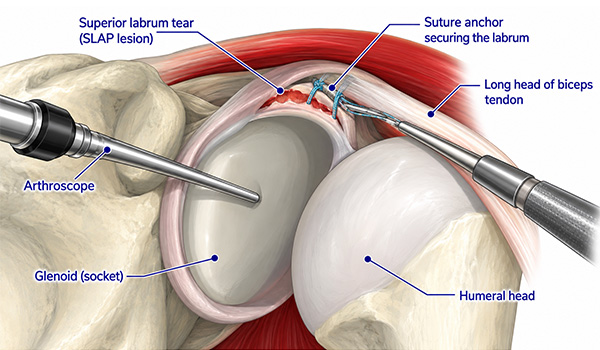
SLAP stands for Superior Labral Anterior to Posterior. A SLAP tear affects the upper part of the labrum, the rim of cartilage around the shoulder socket, where the long head of the biceps tendon attaches.
A shoulder labral tear can develop following a fall, dislocation, repeated overhead activity or sporting injury. Symptoms may include deep shoulder pain, clicking or catching, weakness, instability and pain during throwing or lifting. I assess each patient individually before recommending SLAP tear surgery in Edinburgh. Not every tear requires an operation; physiotherapy, activity modification and pain relief may be appropriate in some cases.
What Does the Arthroscopic SLAP Repair Operation Involve?
Arthroscopic SLAP repair is a keyhole procedure performed under a general anaesthetic. I usually use two or three small incisions, each around 5mm long, to introduce a camera and specialised instruments into the shoulder.
During the procedure, I inspect the joint and confirm the extent of the labral injury. The damaged origin of the long head of the biceps tendon is then carefully prepared and repaired back to the socket using small anchors and sutures. This aims to restore stability at the top of the labrum.
Arthroscopic SLAP tear surgery in Edinburgh is designed to treat the specific injury while minimising disruption to the surrounding tissues. The exact technique will depend on your shoulder, the pattern of the tear and any associated problems found during shoulder arthroscopy.
General Advice Following Surgery
Pain Relief
A nerve block is usually used during arthroscopic SLAP repair. This means your shoulder and arm may feel completely numb immediately after the operation, sometimes for several hours. As the block wears off, it is normal for the shoulder to become sore.
You will be given pain relief during your hospital stay and medication to continue at home if required. Ice packs can also help reduce discomfort and swelling. Wrap crushed ice or frozen peas in a damp cloth and apply this to the shoulder for up to 15 minutes at a time. Do not place ice directly onto the skin.
Wearing a Sling
You will return from theatre wearing a sling to protect the labral repair. This is usually worn for around six weeks, although I and your physiotherapist will confirm the right duration for your individual recovery.
You should normally remove the sling only to complete the exercises advised by your physiotherapist. During the early stages of recovery, it is important to avoid movements or lifting activities that could place strain on the healing biceps attachment and repaired labrum.
Wound Care
Arthroscopic SLAP repair is performed through two or three small puncture wounds, usually around 5mm long. Stitches are not normally required; instead, the wounds are covered with small adhesive plaster strips.
Keep the wounds dry until they have healed, which is usually within five to seven days. I will advise you if there are any specific wound-care instructions to follow. Contact the clinic if you develop increasing redness, swelling, discharge, fever or worsening pain around the wounds.
Driving
You must not drive for a minimum of eight weeks after surgery. You should only return to driving when I have confirmed that it is safe, you are no longer reliant on the sling and you can comfortably control the vehicle, including performing an emergency stop if needed.
Returning to Work
The timing of your return to work depends on your occupation and the physical demands placed on your shoulder. People in desk-based roles may be able to return sooner than those whose work involves lifting, manual labour, repetitive arm movements or overhead activity. We will discuss a suitable timeframe as part of your follow-up care.
Leisure Activities
Your return to leisure activities, gym exercise and sport should be gradual and guided by your recovery. Your physiotherapist and I will advise when it is appropriate to resume particular activities, especially those involving lifting, throwing, contact or overhead movements.
Rehabilitation and Exercises
Rehabilitation is an essential part of recovery following SLAP tear surgery in Edinburgh. You will usually be reviewed in clinic at approximately three weeks and monitored by a physiotherapist throughout your recovery. Formal physiotherapy commonly begins around six weeks after surgery.
Initially, the focus is on protecting the repair. You should avoid elbow flexion against resistance for six weeks, as this can place strain on the healing biceps attachment. Your physiotherapist may ask you to carry out simple movements, such as turning your hand towards the ceiling and ground with the elbow by your side, as well as gentle shoulder shrugs and circles. These are often performed four times daily, but always follow your individual programme.
Risks and Possible Complications
All surgery carries potential risks. I will discuss these with you before proceeding and ensure you have the opportunity to ask questions about your individual circumstances. Although complications are uncommon, it is important to understand them before choosing SLAP repair surgery in Edinburgh.
Infection
There is a small risk of infection in the wounds or shoulder joint, which may require antibiotics or further treatment.
Stiffness
Some patients experience shoulder stiffness after surgery. Physiotherapy and a carefully staged rehabilitation plan help reduce this risk
Ongoing Pain or Incomplete Healing
A repaired labrum may not fully heal, or shoulder symptoms may persist despite treatment. Further assessment may occasionally be required.
Nerve, Blood Vessel or Anaesthetic Risks
These are uncommon but possible risks associated with shoulder arthroscopy and general anaesthesia.
Shoulder Surgery Serving Edinburgh and Fife
NHS Consultations
Queen Margaret Hospital
Whitefield Road,
Dunfermline,
KY12 0SU
Victoria Hospital
Hayfield Road,
Kirkcaldy,
KY2 5AH
Private Consultations
Spire Shawfair Park Hospital
10 Easter Shawfair,
Edinburgh,
EH22 1FE
Spire Murrayfield Hospital
122 Corstorphine Road, Edinburgh,
EH12 6UD
Questions about arthroscopic SLAP repair
What is a SLAP tear and what causes it?
A SLAP tear is an injury to the upper part of the shoulder labrum, where the long head of the biceps tendon attaches to the socket. It can result from a fall, shoulder dislocation, repetitive overhead activity, throwing sports or a direct shoulder injury. Symptoms may include deep shoulder pain, clicking, catching, weakness or instability.
When is surgery recommended for a SLAP tear?
SLAP tear surgery may be considered when shoulder pain, clicking, weakness or instability continues despite appropriate non-operative treatment, such as physiotherapy, activity modification and pain relief. The decision depends on the tear pattern, your symptoms, activity level, shoulder stability and any associated injuries.
Can a SLAP tear heal without surgery?
Not every SLAP tear requires surgery. Some patients improve with a structured physiotherapy programme, changes to aggravating activities and pain management. While the torn labrum may not always heal back to its original position, symptoms can settle sufficiently without an operation. A specialist assessment can help determine the most suitable treatment.
How is a SLAP tear diagnosed?
Diagnosis starts with a detailed history and shoulder examination. X-rays may be used to assess the bones and ultrasound can help identify other shoulder problems. MRI scanning may be required to assess the labrum and biceps attachment. In some cases, the full extent of a SLAP tear is confirmed during shoulder arthroscopy.
What happens during arthroscopic SLAP repair surgery?
Arthroscopic SLAP repair is a keyhole operation performed under general anaesthetic. A camera and specialised instruments are inserted through two or three small incisions. The surgeon assesses the labral tear, prepares the damaged area and repairs the labrum and biceps anchor back to the shoulder socket using small anchors and sutures.
What are the alternatives to arthroscopic SLAP repair?
Alternatives may include physiotherapy, activity modification, pain relief and monitoring symptoms. Depending on your age, shoulder condition, activity demands and the type of biceps-labral injury, other surgical options may occasionally be discussed, such as biceps tenodesis. The appropriate treatment is tailored to the individual patient.
How long does it take to recover from SLAP repair surgery?
Recovery after arthroscopic SLAP repair is gradual. The repair needs protection during the first six weeks, followed by progressive physiotherapy to restore movement, strength and shoulder control. Recovery times vary, but return to heavier work, gym training and overhead sport commonly takes several months. Your rehabilitation plan will be based on your progress and activity goals.
How long will I need to wear a sling after SLAP repair?
A sling is usually required for around six weeks after SLAP repair surgery. For the first three weeks, it is commonly worn with a body belt and removed only for the exercises advised by your physiotherapist. Your surgeon will confirm the precise duration according to the repair performed and your recovery.
When can I return to work, driving and sport after SLAP repair surgery?
Return to work depends on your role and the physical demands on your shoulder. Driving should not resume for at least eight weeks and only when you can safely control the vehicle and have been advised it is appropriate. Return to sport, particularly throwing or overhead sports, is guided by strength, movement and rehabilitation progress and may take several months.
What are the risks and potential complications of arthroscopic SLAP repair?
Complications are uncommon but can include infection, shoulder stiffness, ongoing pain, incomplete healing or recurrent symptoms. There are also small risks to nerves, blood vessels and from general anaesthesia. Careful surgical planning, wound care and a staged physiotherapy programme help reduce risks, which will be discussed fully before surgery.
Discuss Your Shoulder Symptoms
If you have persistent shoulder pain, clicking, weakness or instability following an injury, I can assess whether a SLAP tear or another shoulder condition may be responsible. Contact Fife Shoulder Surgery to arrange a consultation and discuss your options for SLAP tear surgery in Edinburgh.
For more information or to make an enquiry, please call 01313 162530 or email sunil.sharma2@nhs.scot.