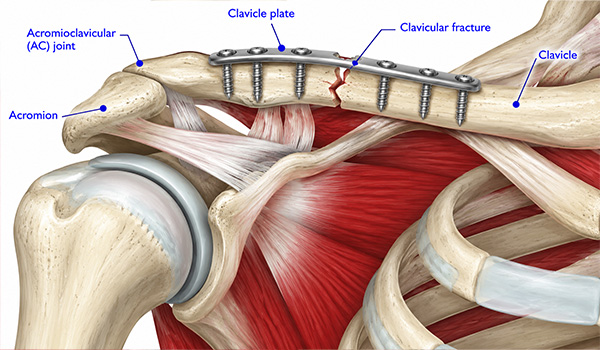
What is clavicular fracture fixation?
The clavicle connects the breastbone to the shoulder blade and plays an important role in supporting normal shoulder movement. A collarbone fracture commonly occurs after a fall, direct impact to the shoulder, sporting injury or other trauma.
Many fractures heal without an operation. However, I may recommend Clavicle fracture surgery in Edinburgh when the bone is significantly displaced, shortened, unstable or unlikely to heal well without fixation. I assess the fracture pattern, your symptoms, activity requirements and overall shoulder function before discussing the most suitable treatment. This is an important part of specialist Shoulder surgery in Edinburgh.
What Does the Clavicular Fracture Fixation Surgery Involve?
Clavicular fracture fixation is usually performed under a general anaesthetic. In some cases, a nerve block is also used to help provide pain relief in the early period after surgery.
Assessment and preparation
I review your X-rays and, where required, further imaging to plan the operation carefully.
Accessing the fracture
I make an incision over the fractured area of the collarbone and carefully expose the broken bone.
Restoring alignment
The fragments are repositioned as closely as possible to their normal anatomical position.
Fixing the fracture
A shaped metal plate and screws are used to hold the bone securely while it heals. The exact implant position depends on the fracture location and pattern.
Closing the wound
The wound is closed, covered with a dressing and your arm is placed in a sling. Clavicle fracture surgery in Edinburgh aims to provide stable fixation and support a safe return of shoulder movement and function.
General Advice Following Surgery
Wear your sling as advised
You will usually be given a sling for comfort and protection during the early healing period. The duration will depend on your fracture and progress.
Begin safe movement
A physiotherapist may provide exercises to help maintain and gradually restore shoulder movement. Please perform these only as instructed.
Avoid lifting and pushing
Do not lift, carry, push, pull or use the operated arm to support body weight until you have been advised that it is safe to do so.
Manage pain and swelling
Take prescribed pain relief as directed. Ice may help with swelling and discomfort when used safely and as advised.
Return to activity gradually
Office-based work may be possible sooner than manual work. Driving should only resume when you can safely control the vehicle, including performing an emergency manoeuvre.
Possible Complications
All operations carry some risk. Complications after clavicle fixation are uncommon, but it is important that you understand them before deciding on treatment. I will discuss the risks relevant to your injury, health and planned procedure during your consultation at Fife Shoulder Surgery.
Anaesthetic & Wound Complications
These include anaesthetic-related problems, bleeding, swelling, infection, delayed wound healing and scarring.
Nerve or Blood
Vessel Injury
Nerves and blood vessels lie close to the collarbone. Injury is unusual but can cause altered sensation, weakness or other symptoms.
Stiffness, Pain or Reduced Function
Some patients experience ongoing pain, shoulder stiffness or a reduction in strength despite successful healing.
Delayed union or non-union
Occasionally, a fracture may heal slowly, fail to unite fully or move despite fixation, potentially requiring further treatment.
Because the plate can sit close to the skin, it may feel prominent or become uncomfortable with a seatbelt or rucksack. If symptoms persist after healing, metalwork removal can be discussed. These considerations form part of planning Clavicle fracture surgery in Edinburgh.
Shoulder Surgery Serving Edinburgh and Fife
NHS Consultations
Queen Margaret Hospital
Whitefield Road,
Dunfermline,
KY12 0SU
Victoria Hospital
Hayfield Road,
Kirkcaldy,
KY2 5AH
Private Consultations
Spire Shawfair Park Hospital
10 Easter Shawfair,
Edinburgh,
EH22 1FE
Spire Murrayfield Hospital
122 Corstorphine Road, Edinburgh,
EH12 6UD
Questions about clavicular fracture fixation
When does a broken collarbone require surgery?
Clavicle fracture surgery may be recommended when the fracture is significantly displaced, shortened, unstable, open, associated with skin pressure or unlikely to heal well without fixation. Surgery may also be considered for certain active patients where restoring alignment and shoulder function is particularly important. Your X-rays, symptoms and activity needs will be assessed individually.
Can a clavicle fracture heal without surgery?
Yes. Many collarbone fractures heal successfully without an operation using a sling, pain relief and gradual physiotherapy-led rehabilitation. However, some displaced or unstable fractures have a higher risk of poor alignment, delayed union or non-union. A specialist assessment can help determine whether non-operative treatment or clavicle fracture fixation is most suitable.
What is clavicular fracture fixation surgery?
Clavicular fracture fixation is an operation to stabilise a broken collarbone. The bone fragments are carefully repositioned and held in alignment with a shaped metal plate and screws while the fracture heals. It is also known as clavicle plating or broken collarbone surgery.
How is a broken collarbone diagnosed?
A clavicle fracture is usually diagnosed through a clinical examination and X-rays. You may have pain, swelling, bruising, tenderness or a visible prominence around the collarbone after a fall, sporting injury or direct blow to the shoulder. Further imaging, such as a CT scan, may occasionally be required to clarify the fracture pattern and assist surgical planning.
What happens during surgery to fix a broken collarbone?
Clavicle fracture surgery is usually performed under a general anaesthetic, sometimes with a nerve block for early pain relief. An incision is made over the fracture, the bone fragments are restored to a more normal position and a plate and screws are used to secure them. The wound is closed and the arm is placed in a sling.
What are the alternatives to clavicle fracture fixation surgery?
The main alternative is non-operative care, usually involving a sling for comfort, pain management, monitoring with X-rays and a gradual return to movement and strengthening exercises. This is appropriate for many fractures. If a fracture heals poorly or remains painful, delayed surgery may occasionally be discussed, depending on the circumstances.
How long does it take to recover from clavicle fracture fixation?
Early recovery takes several weeks, while bone healing commonly takes around six to 12 weeks. Movement, strength and confidence can continue improving for several months after clavicle fracture surgery. Recovery times vary according to the fracture pattern, your health, work demands, rehabilitation progress and whether there are any complications.
How long will I need to wear a sling after collarbone surgery?
A sling is usually worn for comfort and protection during the early healing period after clavicle fixation. The exact duration varies depending on the fracture and your progress, so follow the advice given by your surgeon and physiotherapist. You may begin gentle exercises before the sling is fully discontinued, but only as instructed.
When can I return to work, driving and sport after clavicle fracture surgery?
Return times depend on your recovery and the demands of your activities. Desk-based work may be possible earlier than manual work. You should only drive when you are no longer restricted by pain or a sling and can safely control the vehicle, including an emergency manoeuvre. Contact sport, heavy lifting and gym-based activity should wait until healing and shoulder strength are confirmed.
What are the risks and potential complications of clavicle fracture fixation?
Potential risks include bleeding, infection, wound healing problems, scarring, stiffness, persistent pain, nerve or blood vessel injury, delayed union, non-union and loss of fixation. The plate may feel prominent or cause irritation from clothing, seatbelts or rucksacks; metalwork removal can sometimes be considered after the fracture has healed. Your individual risks will be discussed during consultation.
Discuss your clavicle fracture treatment
If you have sustained a broken collarbone or have been advised that fixation may be required, I can discuss your diagnosis, imaging and available treatment options. Clavicle fracture surgery in Edinburgh is not necessary for every fracture, but may be beneficial where alignment, stability or healing is a concern.
To arrange a consultation with Fife Shoulder Surgery, please contact me on 01313 162530 or email sunil.sharma2@nhs.scot. I will help you understand the next steps and what to expect from Clavicle fracture surgery in Edinburgh.