Understanding Elbow Fractures
The elbow is a complex joint where the upper arm bone, known as the humerus, meets the two forearm bones: the radius and ulna. A fracture involving one or more of these bones can cause pain, swelling, bruising, deformity and difficulty moving the arm.
Some elbow fractures can be managed without an operation, particularly where the broken bones remain in a good position and the joint is stable. However, Elbow fracture surgery in Edinburgh may be recommended if the fracture is displaced, unstable, extends into the joint surface, or is unlikely to heal in a satisfactory position without fixation.
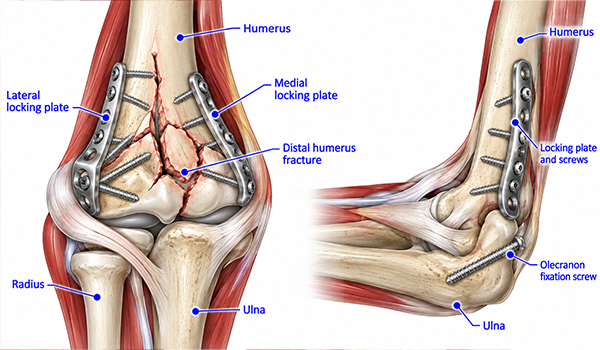
Elbow fracture fixation involves carefully repositioning the broken bone and holding it securely using plates, screws, wires or other fixation devices. The aim is to restore the shape and stability of the elbow while allowing the fracture to heal and preserving as much movement as possible.
At Fife Shoulder Surgery, I will assess the nature of your injury, discuss your imaging and explain whether surgery for a broken elbow is appropriate for you.
What Does an Elbow Fracture Fixation Surgery Involve?
Elbow fracture surgery in Edinburgh is usually carried out under a general anaesthetic. A nerve block may also be offered to help control pain during the first hours after surgery.
I make an incision around the elbow to access the fractured bone. The broken fragments are carefully repositioned as close as possible to their normal anatomical alignment. I then stabilise the fracture using metal plates and screws, or another appropriate fixation method depending on the fracture pattern and the structures involved.
Where the fracture extends into the elbow joint, particular care is taken to reconstruct the joint surface accurately. Once the fracture is stable, the wound is closed and the arm may be placed in a sling or temporary splint.
The purpose of Elbow fracture surgery in Edinburgh is to provide stable fixation while allowing controlled movement during recovery. Early movement is often important because the elbow can become stiff relatively quickly after injury or surgery. Your exact rehabilitation plan will depend on the type of fracture, the stability of the repair and advice from your physiotherapist.
General Advice Following Surgery
Sling and Support
You may be given a sling following your operation. This is usually for comfort and support and should be worn according to the specific instructions you receive.
Movement and Physiotherapy
A physiotherapist will guide you through exercises for the elbow, wrist and hand. Following this programme is an important part of recovery after Elbow fracture surgery in Edinburgh, helping restore movement while protecting the repair.
Pain and Swelling
Pain, bruising and swelling are common after fracture surgery. Take pain relief as prescribed, keep your arm elevated where practical and use ice only as advised by your clinical team.
Daily Activities
Initially, avoid lifting, carrying, pushing or pulling with the operated arm. Do not use the arm to support your body weight until I or your physiotherapist confirms it is safe to do so.
Driving, Work and Exercise
Do not drive until you can safely control the vehicle and perform an emergency manoeuvre. Desk-based work may be possible before work involving lifting or repetitive arm use. A gradual return to exercise and sport will be advised as your fracture heals.
Risks and Possible Complications
All operations involve some risk. Complications following Elbow fracture surgery in Edinburgh are uncommon, but it is important to understand the possible risks before deciding to proceed.
Anaesthetic Risks
There are general risks associated with anaesthesia, which your anaesthetist will discuss with you.
Infection, Bleeding
and Wound Problems
Infection, bleeding, swelling, wound healing difficulties or discharge from the wound can occur after surgery.
Nerve or Blood Vessel Injury
Important nerves and blood vessels pass close to the elbow. Injury may cause numbness, altered sensation, weakness or circulation problems in the arm or hand.
Stiffness and Ongoing Symptoms
The elbow is particularly prone to stiffness after trauma. Some patients continue to experience pain, reduced movement or reduced strength despite successful fracture fixation.
Delayed Healing or
Fixation Problems
Occasionally, a fracture may heal slowly, fail to unite, or move despite fixation. Plates and screws can sometimes become prominent, loosen or fail, potentially requiring further treatment.
Post-Traumatic Arthritis
A fracture involving the joint surface may increase the future risk of arthritis within the elbow.
Elbow Surgeon Serving Edinburgh and Fife
NHS Consultations
Queen Margaret Hospital
Whitefield Road,
Dunfermline,
KY12 0SU
Victoria Hospital
Hayfield Road,
Kirkcaldy,
KY2 5AH
Private Consultations
Spire Shawfair Park Hospital
10 Easter Shawfair,
Edinburgh,
EH22 1FE
Spire Murrayfield Hospital
122 Corstorphine Road, Edinburgh,
EH12 6UD
Questions about elbow fracture fixation
When does an elbow fracture require surgery?
Elbow fracture surgery may be recommended when the fracture is displaced, unstable, involves the joint surface, causes elbow instability, or is unlikely to heal in a satisfactory position without fixation. Your surgeon will assess your X-rays or scans, symptoms and functional needs before advising treatment.
Can an elbow fracture heal without surgery?
Yes. Some elbow fractures can heal without surgery if the bones remain well aligned and the joint is stable. Non-operative treatment may involve a sling or splint followed by guided movement and physiotherapy. Surgery is more likely where the fracture has moved or affects elbow joint function.
What types of elbow fractures can be treated with surgery?
Surgery can be used to treat fractures affecting the lower humerus, radial head or neck, olecranon and other parts of the ulna. Complex fractures involving multiple bones, joint surfaces or ligament injuries may also require elbow fracture fixation to restore stability and movement.
What is elbow fracture fixation surgery?
Elbow fracture fixation is an operation to reposition broken bone fragments and hold them securely while they heal. The surgeon may use plates, screws, wires or other fixation devices, depending on the fracture pattern and the bones involved.
What happens during surgery to fix a broken elbow?
Broken elbow surgery is usually performed under a general anaesthetic, sometimes with a nerve block for pain relief. An incision is made around the elbow, the fracture is carefully realigned and fixation devices are used to stabilise the bone. The wound is then closed and the arm may be supported in a sling or temporary splint.
How is an elbow fracture diagnosed and assessed before surgery?
Assessment usually includes a clinical examination, X-rays and, where needed, a CT scan to show the fracture in greater detail. Your surgeon will consider the position of the fracture, joint involvement, stability, nerve and blood vessel function, general health, work and activity requirements.
How long does it take to recover from elbow fracture fixation?
Recovery after elbow fracture fixation varies according to the injury and repair. Bone healing often takes several months, while stiffness, weakness and discomfort can continue to improve for longer. Early guided movement and physiotherapy are often important because the elbow can stiffen quickly after injury or surgery.
How long will I need to wear a sling after elbow fracture surgery?
A sling is commonly provided for comfort and support after elbow fracture surgery, but the duration varies depending on the fracture and stability of the fixation. Your surgeon and physiotherapist will give specific instructions on when to wear it and when to begin controlled exercises.
When can I return to work, driving and exercise after elbow fracture fixation?
Desk-based work may be possible before work involving lifting, manual handling or repetitive arm use. You should not drive until you can safely control the vehicle and perform an emergency manoeuvre. Return to exercise, sport and heavier activities should be gradual and guided by fracture healing and clinical advice.
What are the risks and potential complications of elbow fracture fixation?
Potential complications include infection, bleeding, wound problems, nerve or blood vessel injury, elbow stiffness, persistent pain, delayed union or non-union, fixation loosening or failure, and post-traumatic arthritis. Seek prompt medical advice for increasing pain, redness, wound discharge, fever, new numbness or weakness.
Arrange an Elbow Consultation
If you have sustained an elbow injury, have been diagnosed with a displaced elbow fracture or have been advised that you may need fixation surgery, I can assess your condition and discuss the appropriate options.
Fife Shoulder Surgery offers specialist Elbow fracture surgery in Edinburgh for patients from Edinburgh, Fife and surrounding areas. To arrange a consultation or discuss a referral, please call 01313 162530 or email sunil.sharma2@nhs.scot. I will help you understand the next steps in your treatment and recovery.