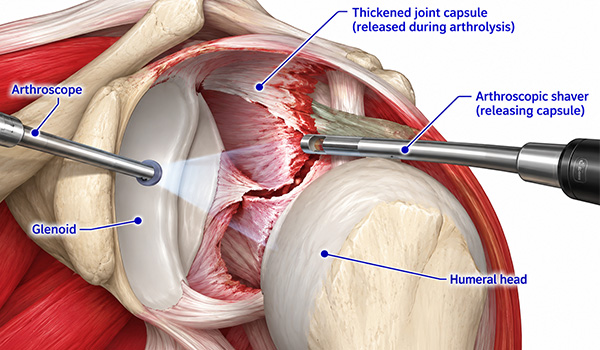
What Is Manipulation and Arthroscopic Arthrolysis for Frozen Shoulder?
Frozen shoulder, also known as adhesive capsulitis, occurs when the soft tissues surrounding the shoulder joint become inflamed, tight and shortened. This can cause considerable pain, restricted movement and difficulty with everyday activities such as dressing, reaching overhead or sleeping comfortably.
Although frozen shoulder can improve without surgery, this may take up to two years. Frozen shoulder surgery in Edinburgh can be considered where pain and stiffness remain significant despite appropriate non-surgical treatment, including pain relief, injections and physiotherapy. At Fife Shoulder Surgery, I will discuss the likely benefits, limitations and alternatives before recommending a frozen shoulder operation.
What does frozen shoulder surgery involve?
A manipulation under anaesthetic (MUA) is performed while you are asleep under a general anaesthetic. I carefully move the shoulder through its range of movement to stretch the tight joint capsule and improve mobility. Local anaesthetic and steroid may also be injected to help reduce inflammation and pain after the procedure.
If manipulation alone does not achieve a satisfactory range of movement, I may carry out arthroscopic arthrolysis. This is keyhole frozen shoulder surgery in Edinburgh, performed through two or three small incisions around the shoulder. A small camera is used to view the joint, and specialist instruments release the tight soft tissues around the shoulder.
This arthroscopic release for frozen shoulder in Edinburgh is designed to improve movement while minimising disruption to surrounding tissues. The exact technique used will depend on your shoulder stiffness and findings at surgery.
General Advice Following Surgery
Going Home
Most patients undergoing a frozen shoulder operation in Edinburgh are treated as day-case patients and can usually go home on the same day. Before discharge, you will be reviewed by a doctor or physiotherapist and given guidance on pain relief, wound care and exercises.
Start Exercises Promptly
Exercises begin immediately after your procedure. This is an essential part of maintaining the movement gained during manipulation or shoulder arthrolysis. I will provide clear advice about the exercises that are suitable for you.
Arrange Physiotherapy
in Advance
Outpatient physiotherapy should ideally be arranged for the day after your operation, before you are admitted to hospital. Regular physiotherapy in the first few weeks is particularly important after frozen shoulder surgery in Edinburgh. Fife Shoulder Surgery can explain what to organise before your treatment.
Returning to Normal Activities
You may return to work as soon as you feel able, depending on your role and the demands it places on your shoulder. Driving is usually possible after around one week, provided you are comfortable, can control the vehicle safely and are no longer affected by strong pain medication.
Risks and Possible Complications
All operations carry potential risks. Complications following manipulation under anaesthetic or arthroscopic arthrolysis are uncommon, but it is important to understand them before proceeding. I will discuss your individual risks during your consultation and answer any questions you may have.
Anaesthetic Risk
There are general risks associated with anaesthesia, which will be discussed with you by the anaesthetic team before surgery.
Nerve Injury
There is a small risk of injury to nerves around the shoulder. This is uncommon but may affect sensation or muscle function.
Incomplete Improvement
While many patients notice substantial improvement, surgery cannot guarantee complete pain relief or full movement. I would usually expect approximately 75% improvement in symptoms within the first four to six weeks, although recovery varies between individuals.
Fracture
There is an extremely rare risk of the upper arm bone, or humerus, breaking during manipulation. Careful technique is used to minimise this risk.
Shoulder Surgery Serving Edinburgh and Fife
NHS Consultations
Queen Margaret Hospital
Whitefield Road,
Dunfermline,
KY12 0SU
Victoria Hospital
Hayfield Road,
Kirkcaldy,
KY2 5AH
Private Consultations
Spire Shawfair Park Hospital
10 Easter Shawfair,
Edinburgh,
EH22 1FE
Spire Murrayfield Hospital
122 Corstorphine Road, Edinburgh,
EH12 6UD
Questions about frozen shoulder surgery
When is surgery recommended for a frozen shoulder that is not improving?
Frozen shoulder surgery may be considered when significant pain and stiffness persist despite appropriate non-surgical treatment, such as pain relief, steroid injections and physiotherapy. Your shoulder specialist will assess your symptoms, movement, scans where needed and overall health before recommending surgery.
Can a frozen shoulder require surgery if physiotherapy has not worked?
Yes. If physiotherapy and other conservative treatments have not improved movement or pain sufficiently, manipulation under anaesthetic or arthroscopic arthrolysis may be discussed. Surgery is not needed for everyone, but it can help selected patients regain movement sooner.
What is manipulation under anaesthetic for frozen shoulder?
Manipulation under anaesthetic (MUA) is a procedure performed while you are asleep under general anaesthetic. The surgeon carefully moves the shoulder through its range of motion to stretch the tightened joint capsule and improve mobility. A local anaesthetic and steroid injection may also be used.
What is arthroscopic arthrolysis and how does it treat frozen shoulder?
Arthroscopic arthrolysis, also called arthroscopic capsular release, is keyhole frozen shoulder surgery. A camera and specialist instruments are inserted through small incisions to release tight, shortened tissue around the shoulder joint, helping to improve movement while minimising disruption to surrounding tissues.
What is the difference between manipulation and arthroscopic release for frozen shoulder?
Manipulation under anaesthetic improves movement by carefully stretching the tight shoulder capsule externally. Arthroscopic release involves keyhole surgery to directly divide and release restricted capsular tissue. Arthroscopic arthrolysis may be used when manipulation alone does not achieve an adequate range of movement.
What happens during surgery for a frozen shoulder?
Frozen shoulder surgery is usually carried out under general anaesthetic as a day-case procedure. Depending on your condition, you may have a manipulation under anaesthetic, an arthroscopic release, or both. You will receive pain-relief advice and be encouraged to begin exercises immediately after the procedure.
How long does it take to recover after frozen shoulder surgery?
Recovery varies, but many patients experience noticeable improvement in pain and movement during the first four to six weeks. Regular physiotherapy and home exercises are essential to maintain the movement gained during surgery. Full recovery can take longer depending on the severity of stiffness and individual healing.
How soon can I move my shoulder after manipulation or arthroscopic arthrolysis?
You should begin shoulder exercises immediately after manipulation under anaesthetic or arthroscopic arthrolysis. Physiotherapy is ideally arranged for the day after surgery, as early and regular rehabilitation is important to prevent the shoulder from becoming stiff again.
When can I return to work and normal activities after frozen shoulder surgery?
You can usually return to work when you feel comfortable enough, depending on your job and the physical demands placed on your shoulder. Driving is often possible after around one week, provided you can safely control the vehicle and are no longer taking strong pain medication.
Can frozen shoulder come back after manipulation or arthroscopic arthrolysis?
Persistent or recurrent stiffness can occur, although many patients achieve substantial improvement after treatment. Attending physiotherapy, carrying out prescribed exercises and following post-operative guidance gives the best chance of maintaining shoulder movement. Your surgeon can discuss your individual likelihood of recurrence.
Discuss Your Shoulder Stiffness
If persistent pain and restricted movement are affecting your quality of life, I can assess whether frozen shoulder surgery in Edinburgh is suitable for you. At Fife Shoulder Surgery, I will explain your diagnosis, discuss non-surgical and surgical options, and help you make an informed decision about your care.
To arrange a consultation regarding Shoulder surgery in Edinburgh, please contact Fife Shoulder Surgery on 01313 162530 or email sunil.sharma2@nhs.scot.