What is Arthroscopic Rotator
Cuff Repair?
The rotator cuff is made up of four muscles and their tendons, which surround the ball of the shoulder joint. These muscles help to fine-tune shoulder movement and support the larger muscles that lift and rotate the arm.
The tendons pass beneath the acromion, which is part of the shoulder blade. This area can leave them vulnerable to wear, injury and tearing. A torn rotator cuff may lead to pain, weakness, disturbed sleep and reduced ability to lift or use the arm. Rotator cuff surgery in Edinburgh may be considered when symptoms remain troublesome despite appropriate non-operative treatment, or when the nature of the tear makes repair advisable.
What does a Rotator Cuff Surgery Involve?
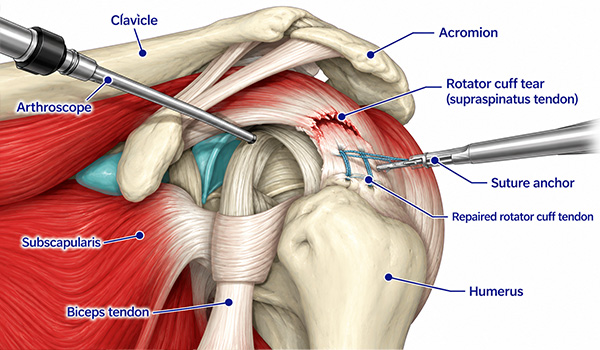
Arthroscopic rotator cuff repair is a keyhole procedure, performed through small incisions around the shoulder. During rotator cuff surgery in Edinburgh, I use a camera and specialist instruments to examine the shoulder joint and assess the torn tendon.
The torn tendon is prepared and then stitched back to its attachment on the upper arm bone, known as the humerus. Small anchors may be placed in the bone to secure the repair. Other issues within the shoulder can also be assessed and treated if required.
This form of shoulder surgery in Edinburgh is usually performed under a general anaesthetic, often with a regional nerve block to help manage pain after the procedure. I will discuss the likely benefits, alternatives and recovery plan with you before surgery.
General Advice Following Surgery
Day-Case or
Overnight Admission
Arthroscopic rotator cuff repair may be performed as a day case, although some patients may stay in hospital overnight depending on their individual circumstances.
Wearing a Sling
Your arm will usually need to remain in a special sling for at least three weeks. The sling protects the repaired tendon while it begins to heal. You will not be able to use the arm normally during this period.
Work and Daily Activities
You should expect to be off work for a minimum of three weeks. The total time away from work will depend on your role, particularly if it involves manual work, lifting or overhead activity.
Physiotherapy and Rehabilitation
Outpatient physiotherapy will be arranged after your operation. Rehabilitation can continue for a considerable time, as tendon healing and restoration of shoulder strength take time. It is very important to follow the programme given by your physiotherapist carefully. At Fife Shoulder Surgery, I will ensure you understand the restrictions and milestones relevant to your recovery.
Possible Complications
All operations carry some risk, although complications following arthroscopic rotator cuff repair are uncommon. Before proceeding with rotator cuff surgery in Edinburgh, I will discuss the potential risks in relation to your own shoulder condition, the size of the tear and your general health.
Anaesthetic-Related Complications
There are small risks associated with general anaesthetic and, where used, regional nerve blocks. These will be discussed by the anaesthetist.
Shoulder stiffness
Some patients develop stiffness after surgery. Physiotherapy and a carefully managed rehabilitation programme are important in reducing this risk.
Infection
Infection following shoulder arthroscopy is rare, but it may require antibiotics or, occasionally, further treatment.
Further Tendon Tear & Further Weakness
A repaired tendon can tear again. The likelihood is influenced by factors including the size and quality of the original tear, age, tissue healing and adherence to post-operative guidance.
Shoulder Surgery Serving Edinburgh and Fife
NHS Consultations
Queen Margaret Hospital
Whitefield Road,
Dunfermline,
KY12 0SU
Victoria Hospital
Hayfield Road,
Kirkcaldy,
KY2 5AH
Private Consultations
Spire Shawfair Park Hospital
10 Easter Shawfair,
Edinburgh,
EH22 1FE
Spire Murrayfield Hospital
122 Corstorphine Road, Edinburgh,
EH12 6UD
Questions about arthroscopic rotator cuff repair
When is surgery recommended for a torn rotator cuff?
Rotator cuff surgery may be recommended when pain, weakness, night pain or loss of function continues despite appropriate non-operative treatment, such as physiotherapy and pain management. Surgery may also be advisable for certain acute, large or functionally significant tears. Your symptoms, scan findings, activity level and overall health are considered individually.
Can a torn rotator cuff heal without surgery?
A torn tendon does not usually reattach to the bone without surgery, but many people can manage symptoms successfully without an operation. Physiotherapy can improve shoulder movement, strength and function, while activity modification and pain relief may reduce discomfort. Surgery is considered when non-operative treatment does not provide adequate improvement.
What happens during arthroscopic rotator cuff repair surgery?
Arthroscopic rotator cuff repair is keyhole shoulder surgery performed through small incisions. A camera is used to inspect the joint and assess the tendon tear. The tendon is prepared and stitched back to the upper arm bone using small anchors where required. Other shoulder problems may be treated at the same time if appropriate.
How is a rotator cuff tear diagnosed before surgery?
Diagnosis begins with a detailed history and shoulder examination. Imaging may include X-rays and ultrasound, which can often be arranged as part of a one-stop assessment. An MRI scan may be requested in some cases to provide further detail about the tendon tear, muscle quality and surrounding shoulder structures.
What are the alternatives to arthroscopic rotator cuff repair?
Alternatives depend on the type of tear and your symptoms. They can include physiotherapy, activity modification, anti-inflammatory medication where suitable, pain-relieving injections and observation. For tears that cannot be repaired or where arthritis is present, other surgical procedures may occasionally be considered after specialist assessment.
How long does it take to recover from arthroscopic rotator cuff repair?
Recovery after rotator cuff surgery is gradual because the repaired tendon needs time to heal to the bone. Early rehabilitation focuses on protecting the repair and restoring movement, followed by strengthening exercises. Many patients improve over several months, but full recovery of strength and function can take six to 12 months.
How long will I need to wear a sling after rotator cuff repair?
Most patients need to wear a special sling for at least three weeks after arthroscopic rotator cuff repair. The exact duration depends on the size of the tear, the repair performed and your recovery plan. The sling protects the tendon while early healing takes place.
When can I return to work, driving and exercise after rotator cuff surgery?
You should generally expect to be off work for at least three weeks, with longer time needed for manual, lifting or overhead roles. Driving should only resume when you are out of the sling, can safely control the vehicle and meet your insurer’s requirements. Exercise returns in stages under physiotherapy guidance.
How successful is arthroscopic rotator cuff repair surgery?
Arthroscopic rotator cuff repair can provide meaningful improvement in pain, sleep, movement and shoulder function. Results vary depending on factors such as tear size, tendon and muscle quality, age, smoking status, general health and commitment to rehabilitation. Your likely outcome will be discussed during consultation.
What are the risks and potential complications of rotator cuff repair surgery?
Complications after shoulder arthroscopy are uncommon but include anaesthetic or nerve block risks, shoulder stiffness, infection, persistent pain or weakness, and a further tear of the repaired tendon. The risk of re-tear is influenced by the original tear size, tissue quality and healing. Individual risks are discussed before surgery.
Discuss Your Shoulder Symptoms
If you have ongoing shoulder pain, weakness, night pain or difficulty lifting your arm, I can assess whether a torn rotator cuff may be contributing to your symptoms. Not every tear requires surgery, and I will discuss appropriate non-operative and surgical options with you.
To arrange a consultation and discuss rotator cuff surgery in Edinburgh, please contact Fife Shoulder Surgery on 01313 162530 or email sunil.sharma2@nhs.scot.